


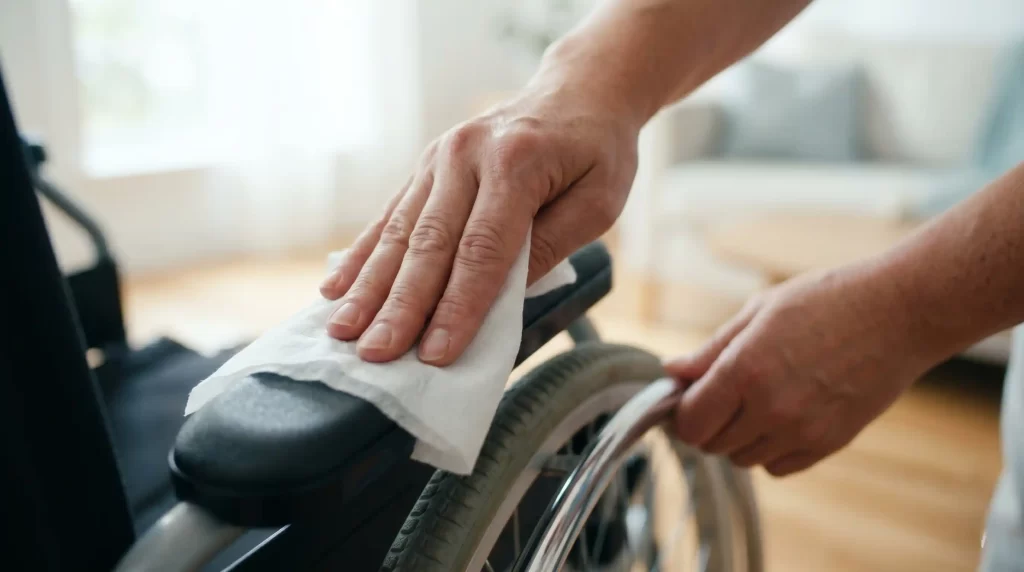
A wheelchair travels everywhere its user goes, across hospital floors, public washrooms, grocery stores, sidewalks, and back into the home, picking up germs, allergens, and grime along the way. Because hands constantly touch push rims, armrests, and controls, then touch food and faces, a wheelchair can quietly become one of the most germ-laden objects in daily life. Proper cleaning and disinfection protects health, prevents the spread of illness, controls odours, and keeps equipment functioning reliably. This guide explains exactly how to clean and disinfect a wheelchair the right way, how often to do it, and which mistakes to avoid, whether you are an individual user, a family caregiver, or staff caring for multiple users.
Cleaning vs. Disinfecting: Understanding the Difference
Many people use these terms interchangeably, but they are not the same, and knowing the difference matters for hygiene. Cleaning removes visible dirt, dust, and grime using soap and water. Disinfecting kills the bacteria and viruses that cleaning alone leaves behind. Effective hygiene requires both steps in the right order, you clean first to remove debris, then disinfect to eliminate germs. Disinfecting a dirty surface does not work properly, because grime shields microbes from the disinfectant.
For everyday personal use, regular cleaning with occasional disinfection of high-touch areas is usually enough. During illness, after hospital visits, or in shared-use settings, thorough disinfection becomes far more important.
Why Wheelchair Hygiene Matters More Than People Think
The health stakes are higher than most users realize. High-touch surfaces on a wheelchair, push rims, armrests, joystick controls, brake levers, harbour bacteria and viruses transferred from every surface and hand they contact. For older adults and people with underlying health conditions, who make up many wheelchair users, infections pose serious risks. Maintaining good equipment hygiene is one part of staying safe and confident in daily life.
Beyond germs, poor hygiene leads to unpleasant odours, skin irritation, and accelerated material wear. Sweat, food spills, and moisture absorbed into upholstery create environments where bacteria and mould thrive, directly affecting comfort and skin health during long hours of sitting.
High-Touch Areas: Your Hygiene Priority
Not all parts of a wheelchair carry equal germ risk. Focus disinfection efforts on the surfaces touched most often: push rims and hand rims, armrests, joystick and control panels on power chairs, brake levers and handles, seat belt buckles, and the backs of push handles used by caregivers. These should be wiped with disinfectant daily, and more often during illness or after time in public spaces.
A quick daily wipe-down of these surfaces takes only a few minutes but dramatically reduces germ transmission. Keep disinfectant wipes accessible so this becomes an easy habit rather than a chore.
Step-by-Step: Cleaning Your Wheelchair Properly
Start by gathering supplies: mild soap or dish detergent, warm water, microfiber cloths, a soft brush, and a wheelchair-safe disinfectant. Avoid harsh abrasives and bleach-heavy products unless the manufacturer confirms they are safe, as they can damage finishes and upholstery.
Begin with the frame, wiping it down with a damp, soapy cloth and paying attention to joints, folding mechanisms, and crevices where grime collects. Dry thoroughly afterward, since trapped moisture causes corrosion, a particular concern given Canadian winter salt and slush exposure. Clean the wheels and tires next, removing embedded debris from treads and wiping rims free of brake dust and road grime.
For upholstery and cushions, remove covers if they are removable and follow the care label, many are machine washable. Spot-clean non-removable fabric with appropriate cleaner and allow everything to air-dry completely before reassembling. Never seal a damp cushion back into its cover, as trapped moisture breeds mould. Proper cushion hygiene also preserves the pressure-relief performance that protects skin.
Step-by-Step: Disinfecting Safely
Once surfaces are clean and dry, disinfect high-touch areas. Apply a wheelchair-safe disinfectant to a cloth or use disinfectant wipes, and wipe each high-touch surface thoroughly. Crucially, respect the product’s “contact time”, the number of minutes the surface must stay visibly wet for the disinfectant to actually kill germs. Wiping it off immediately defeats the purpose. Most products list this on the label, often somewhere between thirty seconds and several minutes.
Take special care around electronics on power wheelchairs. Never spray liquid directly onto joysticks, control panels, or battery components. Instead, dampen a cloth and wipe gently, keeping moisture away from electrical connections. When in doubt about which products are safe for your specific model, check your manufacturer documentation.
Special Situations Requiring Extra Care
Certain circumstances call for more rigorous disinfection. After hospital or clinic visits, disinfect thoroughly, as healthcare settings expose equipment to resistant germs. During cold and flu season or any household illness, increase disinfection frequency and pay special attention to high-touch areas. If a wheelchair is shared between users, as in care facilities or rental situations, disinfect completely between each user without exception.
Caregivers managing wheelchairs in care homes or for multiple clients should establish a consistent disinfection schedule and keep a simple log. Proper hygiene protocols protect both users and staff, and reflect the same attention to wellbeing involved in supporting elderly users’ broader health needs.
Common Mistakes to Avoid
Several frequent errors undermine wheelchair hygiene. Using harsh chemicals that damage upholstery and finishes shortens equipment life. Skipping the contact time means disinfectants never actually work. Leaving moisture on metal components invites rust and corrosion. Forgetting hard-to-reach crevices allows grime and germs to accumulate unseen. Spraying liquid directly onto power wheelchair electronics risks expensive damage. And neglecting cushions and upholstery, the areas with the most prolonged skin contact, defeats much of the purpose of cleaning at all.
Building a Sustainable Hygiene Routine
The most effective hygiene routine is one that is realistic enough to maintain. A simple rhythm works well: a quick daily disinfectant wipe of high-touch surfaces, a more thorough clean weekly, and deep cleaning plus full disinfection monthly or whenever circumstances demand it. Keeping supplies within easy reach and tying cleaning to existing routines, such as a Sunday-evening wheelchair check, helps the habit stick. Regular hygiene also pairs naturally with routine equipment inspection, letting you catch loose bolts, worn tires, or brake issues early.
Power Plus Mobility’s Commitment to Healthy Mobility
At Power Plus Mobility, our Canadian-made wheelchairs are built with quality materials designed to withstand regular cleaning and disinfection while maintaining their finish and function. We understand that hygiene is not a cosmetic concern but a genuine health priority, especially for older adults and people with compromised immune systems.
Well-maintained, properly disinfected equipment lasts longer, performs better, and protects the health of the person who depends on it every day. For more guidance on keeping your equipment and yourself healthy, explore our complete blog collection covering every aspect of mobility and wellbeing in Canada.
Clean Equipment Is Healthy Equipment
Cleaning and disinfecting a wheelchair properly is one of the simplest yet most powerful things users and caregivers can do to protect health and extend equipment life. By understanding the difference between cleaning and disinfecting, prioritizing high-touch surfaces, respecting disinfectant contact times, and building a sustainable routine, you keep germs at bay and your wheelchair in excellent condition.
Hygiene does not require hours of effort, just consistency and the right approach. A few minutes of daily attention, supported by deeper periodic cleaning, makes a meaningful difference to health, comfort, and equipment longevity. Your wheelchair carries you through every part of life, so keeping it clean and germ-free is one of the kindest, healthiest habits you can build.
To visit our social media, please click on Facebook and Instagram