

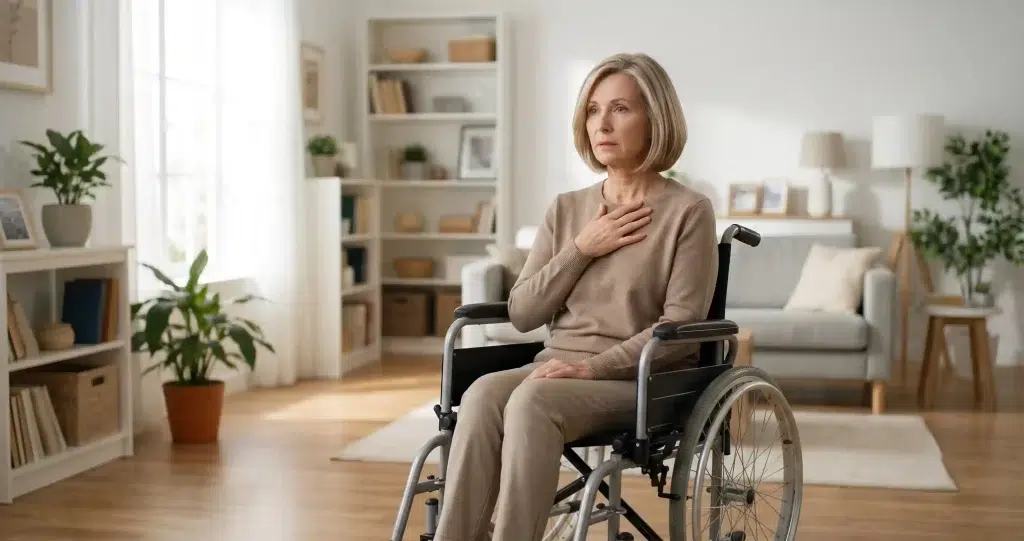
Heart disease remains one of the leading causes of death in Canada, and research shows that 1 in 3 Canadians do not realize that heart attack symptoms can look different in women than in men. For wheelchair users, older adults, and the caregivers who support them, recognizing the warning signs quickly, and knowing how to respond when mobility itself is a barrier, can be the difference between life and death. This guide explains what a heart attack actually feels like, why symptoms are often missed, and what practical steps wheelchair users and caregivers should take if they suspect one is happening.
What a Heart Attack Actually Is
Chest pain or discomfort is the most common symptom of a heart attack in both men and women. However, the symptoms may not always be sudden or severe, and some people do not experience any chest pain at all. Some people only have mild discomfort, some experience only one symptom, while others experience several in combination. This variability is exactly why heart attacks are so often missed or dismissed, by the person experiencing them and by the people around them.
It’s also worth understanding that a heart attack is different from cardiac arrest, even though people often confuse the two. A heart attack is often described as a plumbing problem, where blood flow to the heart is slowed or blocked, while cardiac arrest is an electrical problem, where the heart suddenly and unexpectedly stops beating entirely. Both are medical emergencies requiring an immediate call to 911, but understanding the distinction helps make sense of why symptoms and emergency responses differ.
The Main Warning Signs to Recognize
According to the Heart and Stroke Foundation of Canada, the recognized warning signs of a heart attack include:
Chest discomfort: Pressure, squeezing, fullness, or pain, which can also present as burning or heaviness in the chest. This remains the single most common symptom, but it is far from the only one.
Upper body discomfort: Discomfort in the neck, jaw, shoulder, arms, or back is a recognized warning sign that is frequently overlooked because it doesn’t feel like a “heart” symptom.
Shortness of breath, dizziness, and fatigue: A person may experience shortness of breath, pressure or pain in the lower chest or upper abdomen, dizziness, lightheadedness or fainting, upper back pressure, or extreme fatigue.
Sweating and nausea: Sweating, nausea, and light-headedness round out the list of widely recognized signs, alongside chest and upper body discomfort and shortness of breath.
Critically, while chest pain or discomfort is the most common heart attack sign overall, women can experience a heart attack without any chest pressure at all, presenting instead with the shortness of breath, abdominal pain, dizziness, fatigue, or back pressure described above. This is one of the most important and underrecognized facts about heart attack symptoms, and it is a major reason why half of women who experience heart attacks have their symptoms go unrecognized.
Why Symptoms Are Often Missed in Older Adults and Wheelchair Users
For wheelchair users and seniors, recognizing heart attack symptoms carries extra complexity. Chronic pain, reduced mobility, fatigue from daily physical demands, and existing health conditions can all mask or mimic heart attack symptoms, making it easy to dismiss genuine warning signs as “normal” aches or tiredness. A wheelchair user who already experiences shoulder or upper back discomfort from daily propulsion, or who frequently feels fatigued, may not recognize a new instance of these symptoms as something different and urgent.
This is one more reason why maintaining good general health and energy through appropriate exercise matters, not just for fitness, but because staying attuned to your body’s normal baseline makes it easier to notice when something feels genuinely different. Caregivers supporting elderly or wheelchair-using family members should also stay alert to sudden changes in energy, breathing, or comfort that fall outside someone’s usual pattern, particularly during or after physically demanding activities like travel.
What to Do If You Suspect a Heart Attack
If you experience any of these signs, call 9-1-1 or your local emergency number immediately. Do not wait to see if symptoms pass, and do not attempt to drive yourself or the person experiencing symptoms to the hospital.
While waiting for help to arrive, the Heart and Stroke Foundation recommends the following steps: stop all activity, and sit or lie down in whatever position is most comfortable. If you take nitroglycerin, take your normal dosage. Chew and swallow ASA (Aspirin) if you are not allergic or intolerant, either one 325 mg tablet or two 81 mg tablets, since ASA can help stop the blood clot causing the heart attack from getting bigger. Do not take other pain medications such as Tylenol (acetaminophen) or Advil (ibuprofen) instead of ASA.
For wheelchair users specifically, a few additional practical considerations matter. If you are alone when symptoms begin, call 911 first and stay on the line, even if reaching a phone or door is difficult, as dispatchers can guide you and alert paramedics to forced entry if needed. If you use a power wheelchair and remain conscious, avoid unnecessary movement or self-transfers once you’ve called for help, since exertion increases strain on the heart. If a caregiver or family member is present, they should remain with you, keep you as calm and comfortable as possible, and clearly communicate your medical history, medications, and mobility needs to paramedics on arrival, since this information helps emergency responders provide care more quickly and safely.
Why Acting Fast Matters So Much
Acting fast by calling 9-1-1 at the first symptoms of a heart attack matters because emergency treatment can begin in the ambulance on the way to the hospital. Every minute of delay reduces the heart muscle’s chances of recovery, which is why hesitation, “maybe it will pass” or “I don’t want to make a fuss”, is genuinely dangerous. Survival and recovery outcomes improve significantly the earlier treatment begins, so the guidance is consistent and unambiguous: recognize the signs, and act immediately rather than waiting to see if they resolve on their own.
Reducing Long-Term Risk
While this guide focuses on recognizing emergency symptoms, prevention remains powerful. Almost 80% of premature heart disease and stroke can be prevented through healthy behaviours such as staying smoke-free, eating a balanced diet, managing stress, and staying physically active in ways appropriate to your mobility and abilities. For wheelchair users, this doesn’t mean traditional exercise is off the table, adapted exercise appropriate to individual ability levels supports cardiovascular health just as it does for fully mobile individuals. Knowing your personal risk factors, including blood pressure, cholesterol, and blood sugar, and discussing them with your healthcare provider is one of the most effective long-term protective steps available.
Power Plus Mobility’s Commitment to Whole-Person Wellbeing
At Power Plus Mobility, we believe that supporting mobility means supporting overall health and safety, not just equipment. We are not medical professionals, and nothing in this guide replaces professional medical advice, but we believe every wheelchair user and caregiver deserves clear, accurate information about recognizing medical emergencies and responding quickly.
For more guidance on health, safety, and daily living as a wheelchair user in Canada, explore our complete blog collection.
Know the Signs, Act Without Hesitation
Heart attack symptoms can be subtle, varied, and easy to dismiss, especially for wheelchair users and seniors already managing chronic discomfort or fatigue. Learning the genuine warning signs, chest discomfort, upper body pain, shortness of breath, dizziness, sweating, nausea, and extreme fatigue, and understanding that these signs can appear differently in women than in men, gives you the knowledge to act quickly rather than waiting and hoping symptoms pass.
If you or someone you are caring for experiences any of these signs, call 911 immediately. That single decision, made without hesitation, is the most powerful tool available for surviving a heart attack and protecting the people you love.
To visit our social media, please click on Facebook and Instagram