


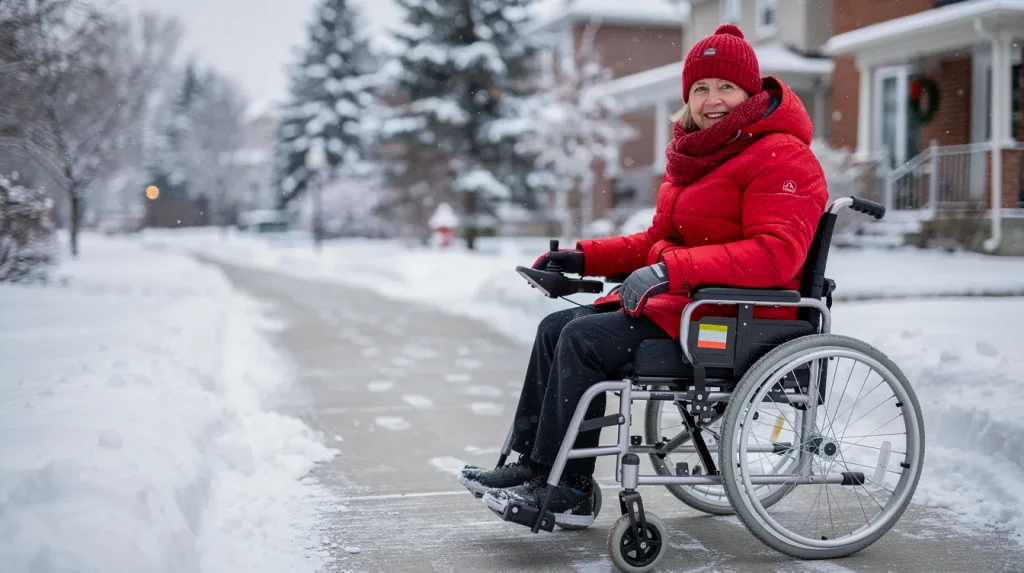
Snow, ice, road salt and −30°C wind chills are hard on people and equipment. If you use a wheelchair, a little preparation now can prevent a breakdown on the coldest morning of the year. This checklist for preparing your wheelchair for Canadian winter covers the parts that matter most. For a deeper dive, see our complete guide to prepping your wheelchair for Canadian snow and ice.
Why Canadian Winters Are Tough on Wheelchairs
Cold temperatures shrink battery range and stiffen moving parts. Slush hides under snow, and salt eats into metal. Short daylight hours also make you harder for drivers and cyclists to see. Knowing these risks lets you deal with each one before the first snowfall.
1. Start With a Full Pre-Winter Inspection
Go over your chair from top to bottom while the weather is still mild:
- Frame and bolts: Tighten anything loose and look for cracks or early rust.
- Brakes: Make sure both wheel locks grip firmly. Ice and grit can reduce braking, so safe stopping matters more in winter.
- Tires and casters: Check tread for wear. Pneumatic tires lose pressure as it gets colder, so check them often. Clear any debris from the caster stems.
- Upholstery and cushions: Look for tears. Damp, worn fabric gets cold quickly.
Replace worn parts now. Waiting for the first storm usually means waiting longer for service.
2. Protect Your Battery From the Cold
Cold weather reduces battery performance. If you use a power wheelchair, plan for shorter range in winter and:
- Charge fully each night, indoors at room temperature.
- Don’t leave the chair in an unheated garage, car or porch for long periods.
- Plan trips with extra margin, and don’t count on a full summer-length range.
- Keep the charger and a short extension cord somewhere easy to reach.
Manual chair users can skip this step, but they should follow the rest of the checklist.
3. Improve Traction on Snow and Ice
Smooth tires lose grip fast on packed snow. Consider:
- Tires with deeper tread, if your chair’s size allows.
- Checking that your anti-tippers are properly adjusted for slippery ground.
- Keeping your speed low on ramps, curb cuts and downhill slopes.
- Using grippy gloves on hand rims. Wet leather or wool can slip.
Avoid fresh, deep snow where you can. Wheelchairs aren’t built to push through drifts, and your shoulders and motors will pay for it.
4. Fight Salt, Slush and Moisture
Road salt speeds up corrosion and can damage electronics and joints. Build a quick routine:
- Wipe the frame, wheels and joystick with a damp cloth as soon as you come inside.
- Dry everything thoroughly, especially around bolts, bearings and connectors.
- Let the chair air-dry away from direct heat, which can warp plastic and cushions.
- Apply a light protective coat to exposed metal parts if your manufacturer recommends it.
Our autumn care guide explains how to clean a wheelchair and keep it rust-free before winter starts.
5. Stay Warm and Seated Safely
Staying warm affects safety as well as comfort. Sitting still in the cold lowers circulation, and numb hands make it harder to steer.
- Wear layers rather than one thick coat, and add a waterproof outer shell.
- Use a wheelchair-specific cover or poncho that doesn’t drape into the wheels.
- Choose insulated, windproof gloves that still give you a firm grip.
- Keep blankets tucked in so nothing can catch in spokes or motors.
- Bulky clothing changes how you sit, so check your posture and pressure points more often.
6. Be Seen and Stay Connected
Winter evenings arrive early. Add reflective tape, a clip-on light or a flag to the back of your chair. Keep your phone fully charged, and think about carrying a small power bank. Cold drains phone batteries too.
7. Clear Your Route at Home
A safe winter starts at your front door:
- Keep ramps, walkways and entrances shovelled and salted.
- Make sure ramp surfaces still have good grip.
- Leave outdoor lights on for evening arrivals.
- Ask neighbours or family to help during heavy snowfalls.
8. Make an Emergency Plan
Winter storms can bring power outages, blocked roads and delays. Plan ahead for how you’d charge your chair, stay warm and contact help. Our emergency preparedness plan for wheelchair users walks you through it step by step.
Quick FAQ
Can I use my wheelchair outside in the snow?
Yes, in light snow and on cleared paths. Avoid deep snow, slush and ice where you can, and dry your chair afterward.
How much does cold affect my power wheelchair battery?
Range drops in cold weather, so plan shorter trips and always charge indoors.
How often should I clean my chair in winter?
Wipe it down after every outing in salt or slush, and give it a deeper clean every few weeks.
Ready for Winter? We’re Here to Help
A few minutes of preparation can keep you moving safely all season. If you need a repair, a part or advice on winter-ready equipment, contact the Power Plus Mobility team. Canadian-built wheelchairs are made for Canadian conditions, and we’re happy to help you roll through winter with confidence.
To visit our social media, please click on Facebook and Instagram