


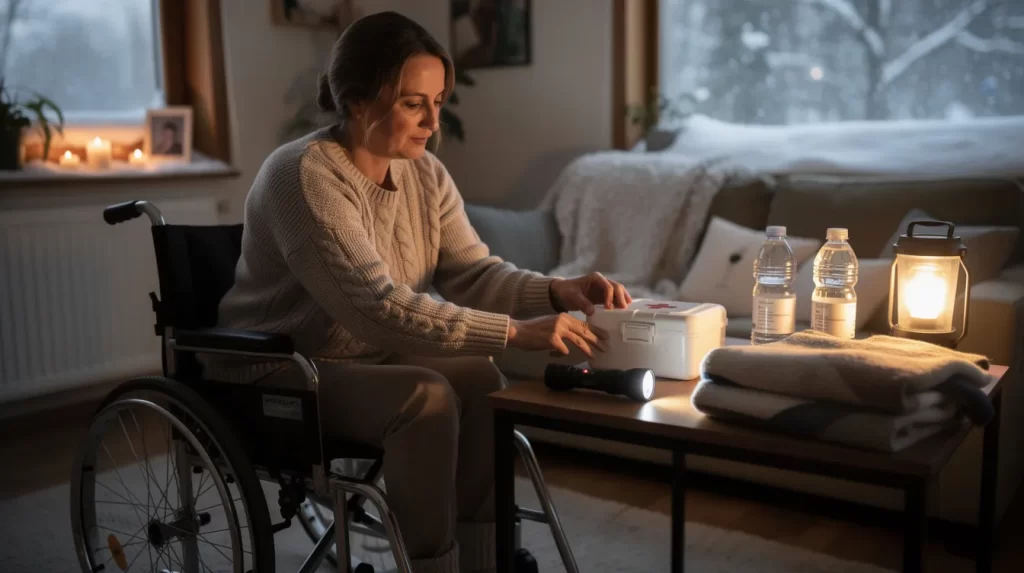
Most emergency preparedness guides are written for the general population — a flashlight, some canned food, a battery radio. But for wheelchair users, a real emergency plan needs to go much further. A power outage isn’t just inconvenient when your wheelchair, home lift, or medical equipment depends on electricity. A winter storm isn’t just cold when icy sidewalks and unplowed ramps can trap you indoors. And an evacuation notice isn’t simple when most emergency shelters and transport vehicles aren’t fully accessible.
In Canada, where severe winter weather, flooding, wildfires, and power grid disruptions are a regular part of life across provinces, wheelchair users need a preparedness plan built around their specific mobility, medical, and equipment needs. Here’s how to go beyond the basic emergency kit and build a plan that actually works for you.
1. Build a Power-Dependent Equipment Backup Plan
If you use a power wheelchair, mobility scooter, home ceiling lift, or any battery-dependent medical device, a power outage is one of the biggest risks you face — especially during Canadian winter storms, which are a leading cause of multi-day outages.
- Know your wheelchair’s battery runtime and keep a manual backup wheelchair on hand if possible, in case your power chair can’t be charged for an extended period.
- Invest in a portable battery backup or generator rated for your equipment’s power needs — confirm wattage requirements with your equipment provider.
- Register with your utility company’s priority restoration list, if available, for customers with medical equipment needs.
- Keep a manual charging cable and car adapter so you can charge essential devices from a vehicle if home power is out.
Suggested internal link #1 — anchor text: “browse our power wheelchairs and backup battery options” → link to your power wheelchairs category page
2. Prepare for Winter-Specific Mobility Challenges
Canadian winters bring unique risks for wheelchair users: icy ramps, snow-blocked exits, and reduced emergency response times in extreme weather.
- Keep a snow and ice removal plan for your ramp and entryway — whether that’s a neighbour, family member, or local snow-removal service you can call quickly.
- Store a cold-weather emergency bag near your main exit with blankets, hand warmers, and weatherproof gloves, in case you’re stuck waiting for help outdoors.
- Check your wheelchair’s cold-weather performance — battery efficiency in power wheelchairs can drop significantly in freezing temperatures, so plan for shorter range in winter months.
- Protect joysticks and electronics from moisture and ice buildup with a weatherproof cover during outdoor use.
Suggested internal link #2 — anchor text: “shop weatherproof wheelchair covers and winter accessories” → link to your accessories category page
3. Create an Accessible Evacuation Plan
Evacuation is often the most overlooked part of emergency planning for wheelchair users — and the most critical to get right before an emergency happens.
- Identify at least two accessible exit routes from your home, and physically test them, not just plan them on paper. A route that looks fine on a floor plan may have narrow turns or steps in practice.
- Contact your local municipality or fire department in advance to ask about their accessible evacuation procedures and whether you can register for a vulnerable persons registry — many Canadian municipalities offer this.
- Plan for stairs in apartment or multi-level buildings. If you don’t have a building-approved evacuation chair, ask your property manager about one, and learn the basics of how it’s used.
- Keep a lightweight, foldable manual wheelchair as a backup for scenarios where your primary chair can’t be transported or charged.
Suggested internal link #3 — anchor text: “explore our lightweight folding manual wheelchairs” → link to your manual wheelchairs category page
4. Pack an Accessibility-Specific Emergency Kit
In addition to standard emergency supplies (water, food, flashlight, radio), wheelchair users should prepare a kit that includes:
- A list of medications, dosages, and prescribing doctors, plus a minimum 3–7 day supply of medication if possible
- Spare wheelchair parts — inner tubes, a basic repair kit, extra cushion if available
- Medical ID documentation noting your mobility equipment, allergies, and emergency contacts
- A portable phone charger or solar charger, since communication is critical during an evacuation or extended outage
- Copies of insurance and equipment warranty information, in case equipment is lost or damaged
Keep this kit somewhere easily reachable from your wheelchair — not in a high cabinet or basement storage area.
5. Know Canada’s Emergency Resources
Canada offers several resources specifically for people with disabilities and mobility needs during emergencies:
- Get Prepared (Public Safety Canada) provides national emergency planning guidance, including a section for people with disabilities.
- Provincial and municipal emergency management offices often maintain accessible-needs registries — check with your local city or town.
- Red Cross Canada offers personal disaster assistance and can help coordinate accessible emergency support in major incidents.
- 211 Canada can connect you to local accessibility and emergency support services in your area.
Taking a few minutes to register with these services now means faster, more appropriate help if an emergency happens.
6. Practice Your Plan Before You Need It
A plan only works if you’ve actually tested it.
- Do a trial run of your evacuation route, ideally with a support person.
- Test your backup battery or generator with your actual wheelchair, not just on paper specs.
- Review your emergency kit every six months to replace expired medication or food items.
- Share your plan with at least one neighbour or nearby contact who can check in during a severe weather event.
Emergency preparedness for wheelchair users isn’t about adding a few extra items to a standard kit — it’s about building a plan around the specific risks that power outages, winter storms, and evacuations pose to your mobility and independence. By preparing backup power, winter-proofing your routine, planning accessible evacuation routes, and connecting with Canada’s disability-specific emergency resources, you can face severe weather season with real confidence instead of uncertainty.
Looking for backup wheelchairs, weatherproof accessories, or equipment built for Canadian conditions? Visit our blog for more accessibility guides, or browse our full range of mobility equipment to build out your emergency plan today.
To visit our social media, please click on Facebook and Instagram