


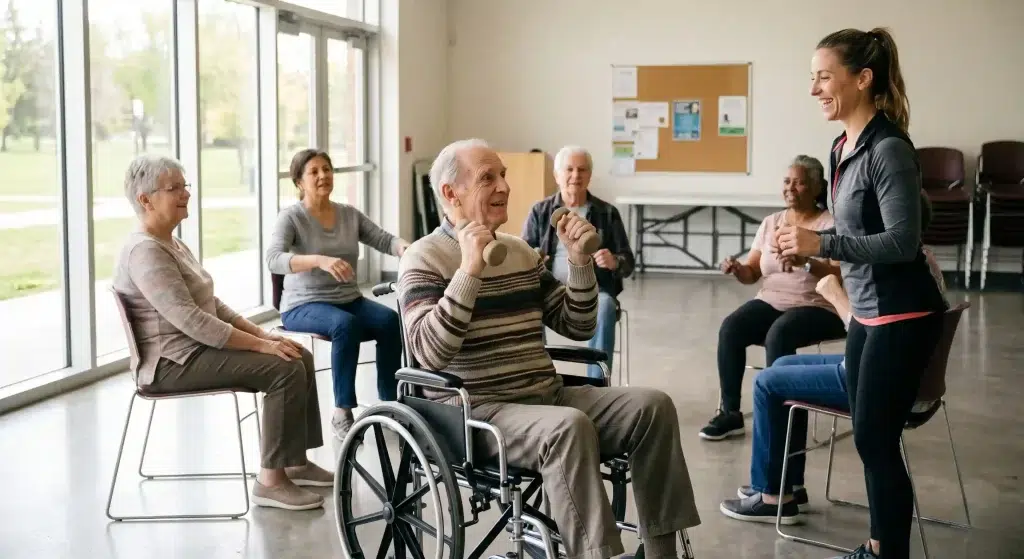
Staying physically active is one of the most powerful things older adults can do to protect their health, independence, and quality of life. Yet exercise is often the first thing seniors abandon as they age, mistakenly believing that slowing down is an inevitable part of getting older. The truth is the opposite: regular movement becomes more important with age, not less. For older adults, including those who use wheelchairs or have limited mobility, exercise reduces the risk of disease, preserves independence, lifts mood, and adds active, enjoyable years to life. This guide explains why exercise matters so much for seniors and how Canadians of all mobility levels can build movement into daily life safely and sustainably.
The Science: What Happens to the Body Without Exercise
Understanding why exercise matters starts with understanding what happens when we stop moving. After about age 50, adults naturally lose muscle mass at an accelerating rate, a condition known as sarcopenia. Without regular use, muscles weaken, bones lose density, joints stiffen, balance deteriorates, and cardiovascular fitness declines. This isn’t simply “old age” at work, much of it is the result of inactivity, and much of it is reversible.
Studies consistently show that older adults who exercise regularly maintain significantly more strength, mobility, and independence than sedentary peers. The body responds to activity at any age. Even people in their 80s and 90s build muscle and improve balance when they engage in appropriate exercise. The phrase “use it or lose it” captures a genuine biological reality for aging bodies.
Preserving Independence and Preventing Falls
For most older adults, maintaining independence is a top priority, and exercise is the single most effective tool for protecting it. Strong muscles and good balance allow seniors to perform daily tasks like dressing, bathing, cooking, and moving around their homes without assistance.
Falls represent one of the greatest threats to senior independence. Each year, falls cause serious injuries that rob older Canadians of their independence, sometimes permanently. Exercise directly addresses this risk by strengthening the muscles that support balance and stability, improving reaction time and coordination, and building confidence in movement. Balance-focused exercises in particular have been shown to substantially reduce fall risk. For those who already use mobility equipment, maintaining independence in daily life depends heavily on preserving the strength they have and building more where possible.
Physical Health Benefits Beyond Strength
The benefits of regular exercise extend to nearly every system in the body. Regular physical activity helps older adults manage and prevent chronic conditions including heart disease through improved cardiovascular function, type 2 diabetes through better blood sugar control, high blood pressure through stronger circulation, and osteoporosis through maintained bone density. Exercise also supports better sleep, improved digestion, stronger immune function, and reduced chronic pain.
For wheelchair users and those with limited mobility, these benefits remain fully accessible through appropriate adapted exercise. Upper-body strength training, seated cardio, and flexibility work all deliver meaningful health improvements. Sustained activity also directly supports daily energy levels, helping seniors feel more capable and less fatigued throughout the day.
Mental Health and Cognitive Benefits
Exercise is as good for the aging mind as it is for the body. Physical activity stimulates the release of endorphins and other brain chemicals that improve mood, reduce anxiety, and combat depression, conditions that affect many older adults, particularly those facing isolation or health challenges.
The cognitive benefits are equally striking. Regular exercise improves memory, sharpens focus, and is associated with a reduced risk of dementia and cognitive decline. Physical activity increases blood flow to the brain and supports the growth of new neural connections. For seniors concerned about maintaining mental sharpness, movement is one of the most protective habits available. Exercise that involves social interaction, like group classes or walking with friends, provides the added benefit of combating loneliness, which itself is a significant health risk for older adults.
Exercise for Wheelchair Users and Limited Mobility
A common misconception is that wheelchair users or people with significant mobility limitations cannot exercise meaningfully. This is simply untrue. Adapted exercise is both possible and highly beneficial, and it can be tailored to virtually any ability level.
Seated exercises offer a tremendous range of options. Upper-body strength training using light weights or resistance bands builds the arm, shoulder, and core strength essential for transfers and propulsion. Seated cardio routines raise the heart rate and build endurance. Stretching and flexibility exercises maintain range of motion and reduce stiffness and pain. Even chair-based versions of yoga and tai chi exist, offering balance, breathing, and relaxation benefits.
Proper seating and positioning matter enormously when exercising in a wheelchair. Good wheelchair ergonomics and positioning provide the stable, supported base needed to exercise safely and effectively. Before beginning any new exercise program, wheelchair users should consult healthcare providers or physiotherapists who can recommend movements appropriate for their specific situation.
Getting Started Safely
The most important principle for older adults beginning exercise is to start slowly and build gradually. Sudden, intense activity risks injury and discouragement. Instead, begin with short sessions and modest goals, then increase duration and intensity over time as strength and confidence grow.
Before starting a new exercise routine, older adults, especially those with chronic conditions or who use mobility equipment, should speak with their doctor. A healthcare provider or physiotherapist can identify safe activities, flag movements to avoid, and help design a program matched to individual needs and goals. Working with professionals early prevents injury and builds an effective foundation.
A few practical principles help seniors exercise safely: warm up gently before activity and cool down afterward, stay hydrated throughout, wear appropriate supportive footwear and clothing, stop if experiencing pain, dizziness, or shortness of breath, and listen to the body rather than pushing through warning signs. Consistency matters far more than intensity, regular moderate activity delivers better results than occasional strenuous efforts.
Building Sustainable Exercise Habits
The best exercise program is one a person will actually stick with. Sustainability comes from choosing activities that are enjoyable, convenient, and social. Seniors who find movement they genuinely like, whether gardening, swimming, dancing, walking, or chair exercises, are far more likely to continue long term.
Setting realistic, specific goals helps maintain motivation. Rather than vague intentions, concrete targets like “exercise for fifteen minutes after breakfast three times a week” provide structure and a sense of accomplishment. Tracking progress, however small, reinforces the habit and demonstrates improvement over time.
Social connection dramatically improves adherence. Group fitness classes designed for seniors, walking groups, or simply exercising with a friend or family member make activity more enjoyable and provide accountability. Many Canadian communities offer senior-focused and adapted fitness programs through community centres, recreation facilities, and seniors’ organizations. For wheelchair users seeking structured activity, adaptive sports and fitness programs offer excellent opportunities to stay active while building community.
Overcoming Common Barriers
Many older adults face genuine obstacles to exercise, and acknowledging them honestly helps in finding solutions. Fear of injury or falling stops many seniors from being active, yet appropriate exercise actually reduces these risks. Starting with supervised or gentle programs builds confidence safely.
Chronic pain or existing health conditions can make exercise seem impossible, but adapted, low-impact activity often reduces pain over time rather than worsening it. Fatigue and low energy, paradoxically, improve with regular gentle activity. And for those who feel self-conscious, senior-specific and adapted programs provide welcoming environments among peers facing similar challenges.
Weather presents a real barrier in Canada, where cold winters can limit outdoor activity for months. Indoor options, including home-based exercise routines, mall walking programs, and community centre facilities, allow seniors to stay active year round regardless of conditions outside.
Power Plus Mobility’s Commitment to Active Aging
At Power Plus Mobility, we believe mobility equipment should empower active, engaged lives rather than signal the end of physical activity. Our Canadian-made wheelchairs are designed to provide the comfort, stability, and support that make staying active possible for older adults and people with mobility challenges.
Proper seating, positioning, and well-fitted equipment form the foundation for safe exercise and active living. Whether someone is performing seated strength training, participating in adaptive sports, or simply staying mobile in daily life, reliable equipment matters. We are proud to support older Canadians in living the active, independent lives they deserve.
For more guidance on staying healthy, active, and independent, explore our complete blog collection covering every aspect of mobility and wellbeing in Canada.
Movement Is Medicine at Every Age
Exercise is not a luxury or an optional extra for older adults, it is essential medicine that protects independence, prevents disease, sharpens the mind, and adds joy and quality to the years ahead. The evidence is overwhelming and consistent: seniors who stay active live healthier, more independent, and more fulfilling lives.
It is never too late to begin. The body responds to movement at every age, and even modest activity delivers meaningful benefits. Whether you are a fully mobile senior, someone managing chronic conditions, or a wheelchair user adapting exercise to your abilities, there is a form of movement that fits your life and improves it.
Start small, stay consistent, choose activities you enjoy, and seek professional guidance to do it safely. Your future self, stronger, more independent, and more capable, will thank you for every step, stretch, and movement you make today. Movement truly is medicine, and it is available to everyone, at every age and every ability level.
To visit our social media, please click on Facebook and Instagram