


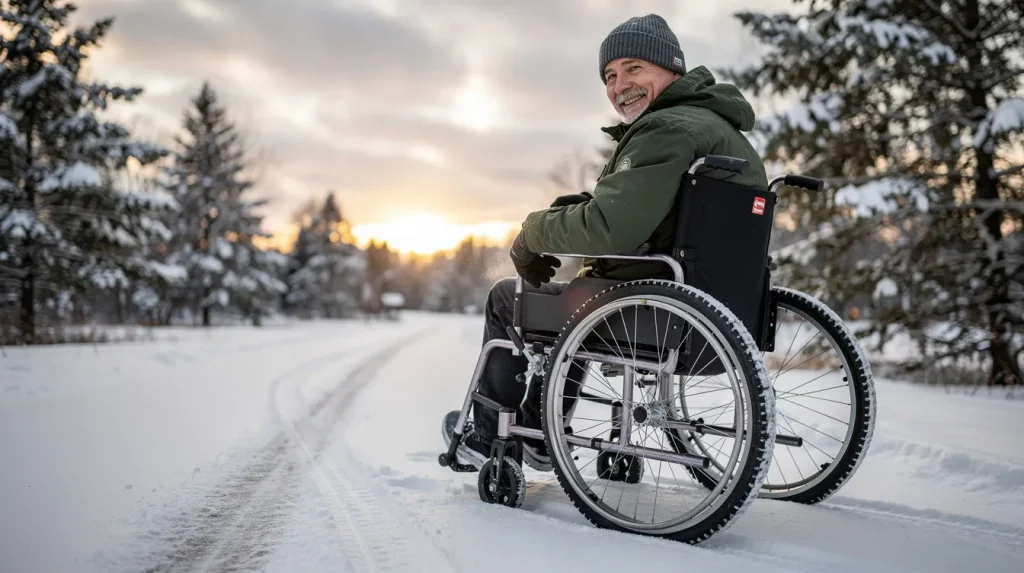
Canadian winters can turn an ordinary trip into a slippery challenge. Packed snow, black ice and slush put extra demands on your chair, and the right gear makes a real difference. This guide covers winter tires for your wheelchair in Canada, plus accessories that keep you warm, dry and visible. If you also need a full preparation list, start with our winter wheelchair checklist.
Why Your Tires Matter More in Winter
Your tires are the only part of your chair that touches the ground. In summer, almost any tire works. In winter, tread, tire material and pressure decide whether you glide through light snow or slide on ice. The best choice depends on where you travel and what type of chair you use.
Pneumatic vs. Solid Tires in Winter
Pneumatic (air-filled) tires usually give better grip and a more comfortable ride. Some users lower the air pressure slightly to increase the contact patch on snow. Don’t go below the minimum pressure on the tire’s sidewall or your manufacturer’s guidance. They also lose air over time, so check them often, especially when temperatures drop.
Solid tires are low-maintenance and can’t go flat. The trade-off is less cushioning, and smooth solid tires can be slippery on wet or icy surfaces. They can still work in snow if they have a suitable tread pattern.
If you spend a lot of time outdoors in winter, pneumatic tires with a deeper tread are often the better choice. If you mostly move indoors and between vehicles, solid tires may be enough.
What to Look for in Winter Wheelchair Tires
- Aggressive, knobby tread. Deeper grooves bite into snow better than smooth, worn tires.
- Wider tires. A wider tire spreads your weight and can feel steadier on packed snow, as long as it fits your frame.
- Softer rubber. Softer compounds tend to hold better in the cold than hard, brittle ones.
- The right size. Always match your chair’s wheel size and axle. Ask your dealer before buying.
- Good condition. Check for cracks, worn tread and uneven wear before the first snowfall.
Swap or Spare: Two Smart Setups
If your chair has quick-release wheels, consider a second set of wheels fitted with winter tires. Swapping them in November and back in spring saves time and keeps your summer tires in good shape. Ask your dealer whether your chair supports this setup.
Don’t Forget the Front Casters
Small front casters often sink into snow or get stuck in slush. Some users add front-wheel attachments or larger casters to help the chair roll over soft surfaces. Not every chair is compatible, so confirm fit and safety with a professional before changing anything.
Winter Accessories Worth Having
Tires are only part of the picture. These accessories can make cold days easier:
- Fenders or splash guards. They keep slush and salty spray off you and your chair’s moving parts.
- Joystick cover (power chairs). If your controller isn’t fully waterproof, a cover helps protect it from snow and moisture.
- Waterproof gloves with good grip. Warm, dry hands steer better. Choose a pair that grips wet handrims.
- A wheelchair cover or poncho. Pick one that doesn’t hang into the wheels.
- Lights and reflective tape. Winter evenings arrive early, so make yourself visible to drivers and cyclists.
- A waterproof cushion cover. Wet seating gets cold fast. Our Soft Cushion is an open-cell foam cushion with a waterproof zipper on standard cushions, which is a good example of what to look for in a seat.
For other comfort and positioning options, browse our wheelchair accessories page.
Accessories to Approach With Care
Not every product that claims to help on snow is safe. Be cautious with:
- Homemade traction fixes, such as chains or studs, which could damage your tires or the floors you roll on indoors.
- Anything that changes the width or balance of your chair without professional advice.
- Loose blankets that can catch in the wheels or motors.
When in doubt, ask a healthcare professional or an authorized dealer.
A Quick Winter Gear Checklist
- Tires with good tread and the right pressure
- Wheels and casters checked for wear
- Gloves that grip when wet
- Lights or reflective tape
- A cover for your joystick or seat
- A charged phone, plus a power bank
FAQ
Do I need special winter tires for my wheelchair?
Not always. If you only travel short distances on cleared paths, your regular tires may be enough. If you often roll through snow or ice, deeper tread helps.
Are pneumatic tires better for snow?
They generally give better grip and comfort, but need regular pressure checks.
Can I add winter accessories to any wheelchair?
Many are universal, but fit varies. Check compatibility before you buy.
Find the Right Setup for Your Chair
Every wheelchair and every user is different. Use our dealer locator to find an authorized Power Plus Mobility dealer who can advise you on tires, wheels and accessories for your specific chair before the snow arrives.
To visit our social media, please click on Facebook and Instagram