


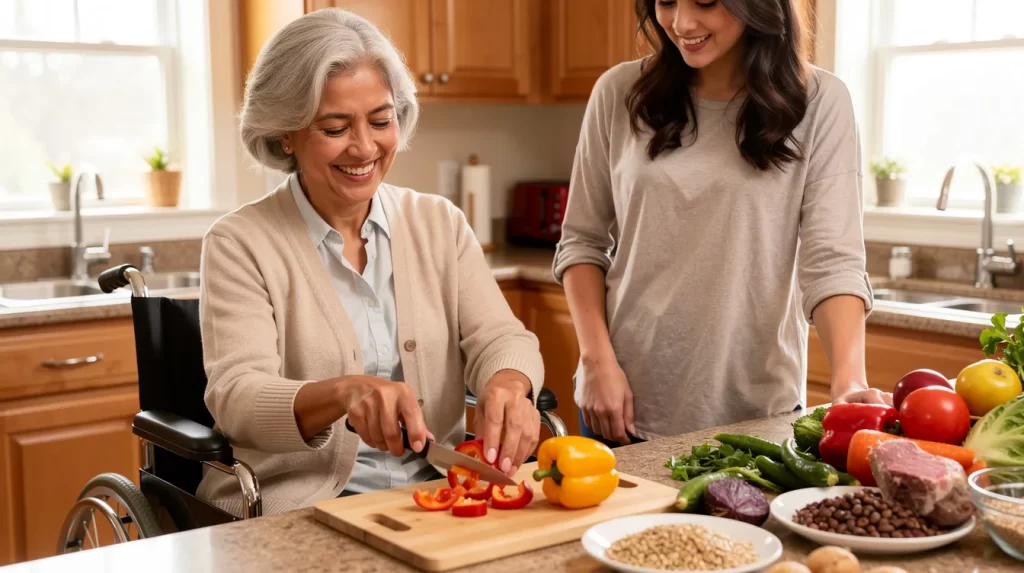
Eating well shouldn’t feel like a full-time job. But for wheelchair users, meal planning often comes with extra hurdles — counter heights, limited reach, energy management, and the simple fact that grocery shopping and cooking take more planning when mobility is part of the equation. The good news? With the right system, organizing healthy meals becomes a simple weekly habit instead of a daily scramble.
In this guide, we’ll walk through a practical, five-step approach to planning, prepping, and enjoying balanced meals — one that fits real life, real kitchens, and real routines. If you’re a caregiver supporting a loved one, or a wheelchair user managing your own household, these strategies work whether you’re cooking for one or for a whole family. For a deeper look at nutrition on the go, our guide on managing food, nutrition, and hydration for elderly wheelchair users while traveling is a great companion resource.
Why Meal Organization Matters More for Wheelchair Users
Good nutrition affects everything from energy levels to skin health, digestion, and mood. For wheelchair users, the stakes are a little higher: fatigue can make transfers harder, dehydration can affect focus and circulation, and inconsistent eating patterns can impact medication schedules or blood sugar. On top of that, kitchen tasks that seem small — reaching a top shelf, standing at a stove, carrying a hot pot to the table — can take significantly more energy and planning.
That’s exactly why organization matters. A well-structured meal system reduces the number of decisions and physical tasks you need to handle each day, which means more energy left over for the things you actually want to do.
Step 1: Plan Your Week Before You Shop
Start with a simple weekly meal map rather than deciding meal-by-meal. Pick five to seven meals, write them on a whiteboard or notes app, and build your grocery list directly from that plan. This one habit eliminates the most exhausting part of cooking: standing in front of an open fridge trying to figure out what to make.
A few tips that make weekly planning easier:
- Repeat two or three “anchor meals” every week so shopping and prep become automatic.
- Choose recipes that share ingredients (one bag of spinach for a salad, a smoothie, and a stir-fry) to cut down on waste and trips to the store.
- Keep a running list on your phone so you can add items the moment you notice you’re running low.
- Consider a grocery delivery service on weeks when energy is limited — it’s a practical way to protect your stamina for meal prep itself.
Step 2: Set Up an Accessible Kitchen Workflow
Meal organization isn’t only about the calendar — it’s also about your physical setup. A kitchen that’s arranged around your reach range and seated position saves real energy every single day.
Some adjustments that make a noticeable difference:
- Store everyday items — plates, mugs, oils, spices — at waist to shoulder height so you’re not reaching or bending repeatedly.
- Use a rolling cart or lap tray to move ingredients and finished dishes between the counter, stove, and table in one trip instead of several.
- Keep lightweight, non-slip cutting boards and pull-out shelving within easy reach to reduce strain during prep.
- The right seating and cushioning setup can make a real difference during longer kitchen sessions, since posture and support affect how much energy prep work actually takes. Take a look at our seating and accessories options if extended time in the kitchen tends to leave you sore or fatigued.
Small setup changes like these compound over a week — they turn a 45-minute cooking session into something far more manageable.
Step 3: Batch Cook and Use Smart Storage
Batch cooking is one of the most effective tools for staying consistent with healthy eating, especially when energy fluctuates day to day. Instead of cooking every meal from scratch, prepare larger portions of a few base components once or twice a week.
Try this simple batch-cooking framework:
- A protein — grilled chicken, baked tofu, lentils, or hard-boiled eggs.
- A whole grain — brown rice, quinoa, or whole wheat pasta.
- Roasted or steamed vegetables — a full tray of whatever’s in season.
- A sauce or dressing — one flavorful base you can rotate across multiple meals.
Store everything in clear, stackable containers so you can see what’s available at a glance. Labeling containers with the date also helps you rotate food safely and avoid waste. On lower-energy days, all you need to do is combine what’s already prepped — no standing at the stove required.
Step 4: Build Balanced, Energy-Boosting Plates
Healthy meal organization isn’t just about convenience — it’s about giving your body what it needs to function well throughout the day. A balanced plate generally includes a source of protein, a complex carbohydrate, healthy fats, and plenty of colour from fruits and vegetables. This combination helps stabilize blood sugar and supports steadier energy, rather than the spike-and-crash pattern that comes from meals heavy in refined carbs or sugar.
If fatigue is a recurring challenge in your day-to-day routine, our guide on how wheelchair users can improve daily energy levels covers how nutrition, hydration, and rest all work together — meal organization is really just one piece of that bigger picture.
Don’t forget hydration, either. Keeping a water bottle within arm’s reach at your kitchen station or workspace makes it far more likely you’ll actually drink enough throughout the day.
Step 5: Make Mealtime Part of Your Independence Routine
Beyond nutrition, organizing meals well is also about maintaining a sense of control and independence in your daily life. When your kitchen, your grocery list, and your weekly rhythm are dialed in, cooking stops feeling like an obstacle and starts feeling like something you can manage on your own terms — or with just the right amount of support.
If independence is a priority in other parts of your daily routine as well, our article on maintaining independence in daily life offers practical strategies that pair well with the meal-planning habits in this guide.
A Simple Weekly Meal Organization Checklist
- [ ] Plan 5–7 meals and build your grocery list from the plan
- [ ] Choose 2–3 repeatable anchor meals for the week
- [ ] Batch cook proteins, grains, and vegetables in advance
- [ ] Store prepped food in clear, labeled containers
- [ ] Set up your kitchen so everyday items are within easy reach
- [ ] Keep water accessible throughout the day
- [ ] Build each plate around protein, whole grains, healthy fats, and colour
Organizing healthy meals is less about following a rigid diet and more about building a system that works with your energy, your kitchen, and your schedule. Start small — even planning just three meals a week can make a noticeable difference — and build from there. The goal isn’t perfection; it’s consistency that supports your independence, energy, and overall well-being.
Looking for more practical, Canadian-focused guidance on living well with mobility challenges? Explore the rest of the Power Plus Mobility blog for tips on daily living, home accessibility, and equipment that supports a more independent lifestyle.
To visit our social media, please click on Facebook and Instagram