


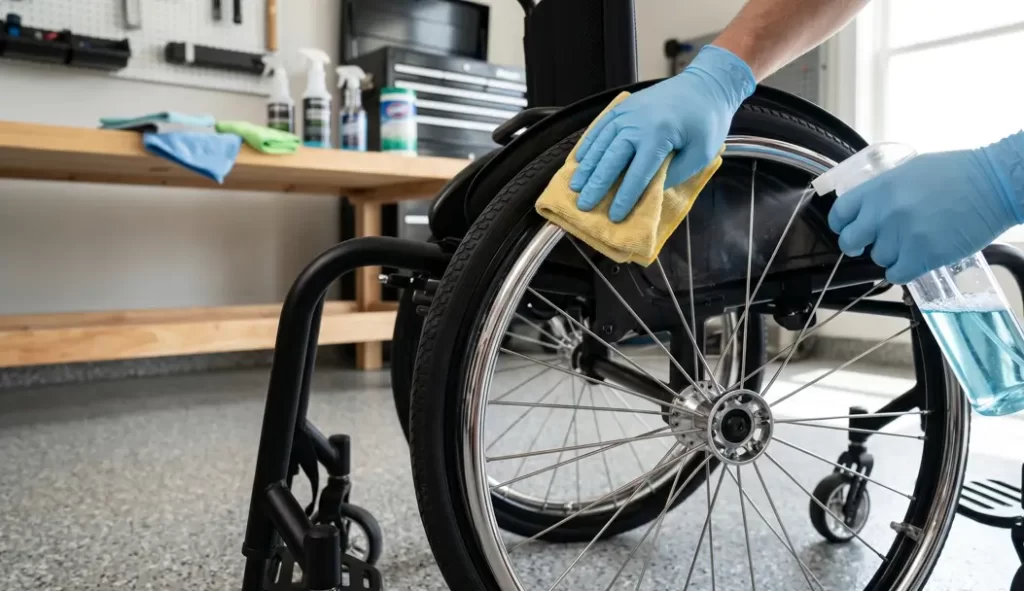
Your wheelchair represents a significant investment in independence and mobility, yet many users overlook proper cleaning and maintenance until problems develop. Regular wheelchair care extends equipment lifespan, prevents costly repairs, maintains optimal performance, and protects your health from bacteria and allergens that accumulate on daily-use equipment. Canadian wheelchair users face additional challenges from road salt, winter moisture, and seasonal temperature extremes that accelerate wear without proper maintenance. This comprehensive guide provides practical cleaning routines, maintenance schedules, and care strategies ensuring your wheelchair performs reliably for years while staying hygienic and presentable.
Why Proper Wheelchair Cleaning Matters
Understanding cleaning benefits beyond appearance motivates consistent maintenance habits.
Preventing Equipment Breakdown: Dirt, debris, and moisture corrode wheelchair components, causing premature failure. Accumulated grime grinds into moving parts like wheel bearings, brake mechanisms, and folding joints, creating friction that accelerates wear. Regular cleaning removes these contaminants before they cause damage, extending your wheelchair’s functional lifespan significantly.
Health and Hygiene: Wheelchairs contact floors, public surfaces, and outdoor environments, accumulating bacteria, viruses, and allergens. Your hands touch your wheelchair constantly throughout the day, then touch your face, food, and other surfaces, potentially transferring pathogens. Upholstery and cushions absorb sweat and body oils, creating environments where bacteria and mold thrive. Regular cleaning protects your health by eliminating these microbial hazards.
Maintaining Appearance and Dignity: Clean, well-maintained wheelchairs contribute to professional appearance and personal dignity. Dirty, neglected equipment affects how others perceive you and how you perceive yourself. Taking pride in your wheelchair’s appearance demonstrates self-respect and attention to detail valued in professional and social contexts.
Preserving Resale Value: If you eventually upgrade or replace your wheelchair, well-maintained equipment retains significantly better resale value. Prospective buyers can see that careful ownership means the wheelchair likely functions well mechanically beyond just appearing clean.
Essential Cleaning Supplies
Having appropriate supplies makes cleaning efficient and effective while protecting wheelchair materials.
Basic Cleaning Kit: Assemble supplies including mild dish soap or wheelchair-specific cleaner, microfiber cloths that don’t scratch surfaces, soft-bristled brushes for textured areas, spray bottles for cleaning solutions, clean water buckets, and soft towels for drying. Avoid harsh chemicals, abrasive cleaners, or rough scrubbing pads that damage wheelchair finishes and materials.
Specialized Products: Consider wheelchair-specific products for certain tasks including upholstery cleaners safe for wheelchair fabrics, bearing lubricants appropriate for wheelchair components, tire cleaners that don’t degrade rubber, metal polish for chrome and aluminum parts, and disinfectant wipes safe for wheelchair materials. Always verify product compatibility with your specific wheelchair materials before use.
Canadian Winter Supplies: Winter weather creates unique challenges requiring additional supplies including rust inhibitors protecting against road salt corrosion, silicone spray preventing moisture damage, and drying towels absorbing snow and slush. Winter cleaning frequency should increase due to increased contamination from de-icing chemicals and wet conditions.
Daily Cleaning Routine
Brief daily cleaning prevents major buildup requiring intensive efforts later.
Quick Wipe-Down: Spend five minutes daily wiping down frequently-touched surfaces including armrests, push rims, control panels, and brakes. Use disinfectant wipes or damp microfiber cloths removing daily grime before it accumulates. This simple habit dramatically reduces deep-cleaning needs.
Tire and Wheel Inspection: Daily visual inspection identifies problems early. Look for embedded debris in tire treads, flat spots indicating low pressure, visible damage or wear, and brake pad condition. Remove stuck items immediately preventing damage as they grind into components during use.
Cushion and Upholstery Maintenance: Brush or wipe cushions removing surface debris, air out cushions when possible reducing moisture buildup, check for tears or damage requiring repair, and rotate reversible cushions for even wear patterns. Proper cushion care maintains comfort and extends cushion lifespan.
Weekly Deep Cleaning
Weekly thorough cleaning addresses areas requiring more attention than daily routines provide.
Frame and Structure: Clean the entire frame using mild soap and water, paying attention to folding mechanisms, adjustment points, and connection joints where dirt accumulates. Dry thoroughly preventing moisture-related corrosion, especially in hard-to-reach areas. Inspect frame integrity during cleaning, identifying cracks, loose bolts, or damaged welds requiring professional attention.
Wheels and Tires: Remove wheels if possible for thorough cleaning. Scrub tires removing embedded debris and buildup, clean wheel rims and spokes eliminating brake dust and road grime, inspect tire pressure maintaining proper inflation, and check for wear patterns indicating alignment issues. Clean, properly inflated tires roll more efficiently, reducing propulsion effort for manual wheelchairs and battery drain for power wheelchairs.
Upholstery and Fabric: Remove cushion covers if removable and machine wash according to manufacturer instructions, spot-clean non-removable upholstery using appropriate cleaners, vacuum fabric surfaces removing embedded dirt and allergens, and air-dry thoroughly before reassembling. Never put wet cushion covers back on cushions—moisture trapped between fabric and foam promotes mold growth.
Moving Parts and Mechanisms: Apply appropriate lubricant to wheel bearings, folding joints, brake mechanisms, and other moving parts following manufacturer specifications. Too much lubricant attracts dirt; too little causes increased friction and wear. Wipe away excess lubricant after application.
Monthly Maintenance Inspection
Monthly detailed inspections identify developing problems before they become serious failures.
Structural Integrity: Examine frame connections for loose fasteners, inspect welds for cracks or damage, check folding mechanisms for proper function, verify seating system security, and test brake effectiveness. Tighten loose bolts and address any concerns immediately rather than waiting for component failure.
Wheel and Tire Assessment: Measure tire tread depth checking for excessive wear, inspect tire sidewalls for cracks or damage, examine wheel alignment, check spoke tension on spoked wheels, and verify bearing smooth operation. Uneven tire wear indicates alignment issues requiring professional correction.
Upholstery and Cushion Evaluation: Assess cushion compression and support, check for tears requiring repair, verify strap and buckle integrity, inspect back support condition, and evaluate whether seating system still provides adequate comfort and support. Proper wheelchair positioning depends on well-maintained seating components.
Power Wheelchair Specific Checks: For power wheelchair users, monthly inspection includes battery charge capacity assessment, motor function verification, control panel responsiveness testing, and wiring integrity inspection. Address electrical issues promptly preventing more serious failures.
Seasonal Deep Cleaning and Preparation
Canadian seasons create distinct maintenance needs requiring specific attention.
Spring Cleaning: After winter’s harsh conditions, thoroughly remove all road salt residue using vinegar-water solutions if necessary, inspect for corrosion requiring treatment, deep-clean all components, lubricate parts more heavily after winter, and assess damage requiring professional repair.
Summer Preparation: Clean and protect materials from UV exposure, ensure proper ventilation preventing overheating, clean more frequently due to increased outdoor use, and inspect components before vacation or travel plans.
Fall Winterization: Prepare for winter challenges by applying rust inhibitors to vulnerable metal parts, treating upholstery with water-resistant protectants, checking all moving parts before winter freeze, and stocking cleaning supplies for increased winter maintenance frequency.
Winter Maintenance: Increase cleaning frequency removing salt and chemicals immediately after exposure, dry wheelchair thoroughly after snow or rain, inspect brake performance in wet conditions, and address rust development immediately.
Cleaning Different Wheelchair Types
Different wheelchair materials and designs require specific cleaning approaches.
Manual Wheelchairs: Focus on maintaining lightweight materials without adding weight through product buildup, pay special attention to push rim cleanliness for hygiene, keep wheels properly aligned for efficient propulsion, and maintain all moving parts for smooth operation.
Power Wheelchairs: Never spray water directly on electrical components, protect batteries and motors from moisture, clean around controls carefully avoiding water intrusion, and consult manufacturer guidelines for electronics-adjacent cleaning. Choosing between manual and power options affects maintenance requirements.
Tilt Wheelchairs: Clean tilt mechanisms regularly preventing debris interference, lubricate moving parts in tilt systems, inspect all connection points, and verify smooth tilt operation. Power Plus Mobility’s tilt wheelchairs including the STP line require specific attention to tilt mechanism maintenance ensuring reliable positioning function.
When to Seek Professional Service
While regular cleaning prevents many issues, some situations require professional intervention.
Schedule professional service when you notice unusual noises indicating mechanical problems, difficulty pushing or maneuvering, brake performance deterioration, frame damage or structural concerns, or upholstery damage beyond simple cleaning. Understanding proper maintenance helps identify when professional expertise becomes necessary.
Power Plus Mobility’s Maintenance Support
At Power Plus Mobility, our Canadian-made wheelchairs are designed for durability and maintainability. We manufacture equipment built to withstand Canadian conditions while remaining accessible for user maintenance.
Our wheelchairs feature quality materials resisting corrosion, accessible design allowing user-performed maintenance, clear documentation for proper care procedures, and responsive customer support answering maintenance questions. We believe well-maintained wheelchairs serve users better and longer, and we support customers in caring for their equipment properly.
For comprehensive guidance on wheelchair care and all aspects of wheelchair living, explore our complete blog collection covering every aspect of thriving with mobility equipment.
Creating Sustainable Maintenance Habits
Consistent maintenance requires building sustainable routines rather than occasional intensive efforts.
Set specific times for maintenance activities, keep supplies easily accessible, involve family members or caregivers if needed, document maintenance in a log tracking completed tasks, and celebrate the benefits of well-maintained equipment through improved performance and longevity.
Protecting Your Mobility Investment
Your wheelchair enables your independence, making proper care essential rather than optional. Regular cleaning and maintenance extend equipment lifespan, prevent breakdowns, protect your health, and maintain the professional appearance supporting dignity and confidence.
Approach wheelchair care systematically: establish daily routines preventing buildup, perform weekly deep cleaning addressing accumulation, conduct monthly inspections identifying developing issues, and adjust seasonally addressing Canadian weather challenges. This proactive approach prevents problems rather than reacting to failures.
Well-maintained wheelchairs serve longer, perform better, and look more professional. The time invested in regular cleaning and maintenance returns dividends through extended equipment life, prevented repairs, maintained reliability, and the confidence that comes from well-cared-for equipment supporting your independence.
Your wheelchair deserves the same care and attention you give other valuable equipment in your life. Treat it well, and it will serve you reliably for years, supporting the active, independent life you deserve.
To visit our social media, please click on Facebook and Instagram